
Foam In Maryland: Why Should We Ban It?
Bill proposed in the 2017 Maryland Legislative Session
Why a ban?
Who would have to comply?
Join Baltimore Beyond Plastic’s anti-Styrofoam initiative, and let’s PASS THIS BAN!
www.bmorebeyondplastic.org
Bill proposed in the 2017 Maryland Legislative Session
Why a ban?
- It’s bad for our health.
- Styrofoam contains carcinogens
- Poisons drinking water by leaching chemicals into groundwater after sitting in landfills
- Toxins gets into seafood, which we then eat
- Often burned with other trash in incinerators → toxic emissions poison our lungs It’s bad for our environment.
- Styrofoam poisons marine life once it is in the waterways
- Big component of waste stream
- Pollutes our streets and Earth
- Contributes to climate change through emissions from trash incineration
- Styrofoam is made out of oil, so it supports fossil fuels and big oil industry
Who would have to comply?
- Corner, dollar, and convenience stores
- Restaurants (including fast food)
- Movie theaters
- Grocery stores (including Styrofoam products like cups)
- Shipping companies (including packing peanuts)
- Schools (cafeteria trays)
- Styrofoam manufacturers
- Schools (reusable trays cost more)
- Small businesses (switching away from Styrofoam costs more)
- Pro-oil industry politicians
Join Baltimore Beyond Plastic’s anti-Styrofoam initiative, and let’s PASS THIS BAN!
www.bmorebeyondplastic.org
Diane MacEachernStyrofoam Bans are Sweeping Across the NationSomething amazing is happening around the country: cities and town are starting to ban Styrofoam.
Throwaway polystyrene coffee cups, soup bowls, plates, and trays have gotten the boot. So have those foamy clamshell-style cartons fast food comes in. Even packing peanuts are going the way of the dodo.
Here’s a list of cities that have completely or partially banned Styrofoam, compiled by Groundswell.
- New York City (and several other cities in New York)
- Takoma Park, MD
- Seattle, Washington
- Washington DC
- Miami Beach, FL
- Freeport, Maine
- Portland, Maine
- Nantucket (City & County), Massachusetts
- Minneapolis, Minnesota
- Portland, Oregon (and several other Oregon cities)
- Los Angeles County and San Francisco, California (and many other cities and counties in CA)
What’s going on — and how can you get in on the anti-Styrofoam action?
For starters, get the lingo right.
Polystyrene, explains Beachapedia, is a type of plastic manufactured from non-renewable fossil fuels (which is where its connection to climate change comes in) and synthetic chemicals. It usually comes in two forms: “Expanded polystyrene foam (EPS), which is the stuff that’s made into cups, plates, take-out food containers, and packing materials; and “solid polystyrene,” which gets turned into plastic forks, CD and DVD cases, even smoke detector housings.
“Styrofoam” is how most of us generically refer to the EPS material, but it’s actually a term trademarked by the Dow Chemical Company for extruded polystyrene that’s used in thermal insulation and craft applications.
Next, understand why polystyrene is a problem.
Beth Terry, author of My Plastic-Free Life, wrote this terrific guide explaining how producing and using plastic pollutes the air. When it comes to the foamy EPS in particular, here are some other objections to using it:
- It does not biodegrade. It may break into small pieces, even minuscule pieces. But the smaller EPS gets, the harder it is to clean up.
- It is made of fossil fuels and synthetic chemicals. Those chemicals may leach if they come in contact with hot, greasy or acidic food. Yes, they keep your coffee hot – but they may also add an unwanted dose of toxins to your drink.
- Animals sometimes eat it. Turtles and fish seem to mistake EPS for food, and that can kill them. Not only can they not digest it, but the foam could be full of poisons that it has absorbed from contaminants floating in the water.
- It can’t be recycled. Some commercial mailing houses may accept packing peanuts, but for the most part community recycling centers do not accept throwaway foam food containers.
I outline some specific ways to skip the styrene here. You can also…
- Take your own containers to restaurants. I’m certainly as guilty as the next person at forgetting to take a reusable container for my leftovers. And I never seem to get around to telling a take-out restaurant that I’ll be bringing in my own containers for the food. But I’m going to try to make that happen. I already keep my shopping bags in the trunk of my car so I won’t forget them. There’s no reason why I can’t keep some reusable food containers there as well.
- Use a reusable coffee mug. I’ve gotten to the point where I carry a small reusable mug in my purse or backpack as a matter of course. I just won’t order a drink if it is served in EPS foam.
- Avoid packaging that can’t be recycled in your community.
- Choose throwaways made from compostable material. If you do need to use throwaways for a picnic or party, choose those that are made from plant-based substances and can be composted. Encourage the restaurants you frequent to switch to compostable carry-out containers, too.
You will probably need your city or county council to pass a new law or ordinance if you want to get Styrofoam banned in your community.
The Surfrider Foundation has pulled together this terrific list of polystyrene ordinances state-by-state, listing the cities and counties that have enacted bans.
Some municipalities have banned the use of polystyrene by all stores, restaurants, parks and beaches. Others target food and beverage containers specifically. Some include eating utensils, and others target plastic materials as well.
Take a Cue from Kids
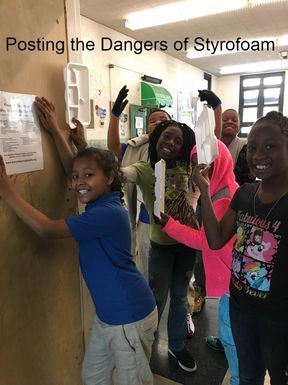
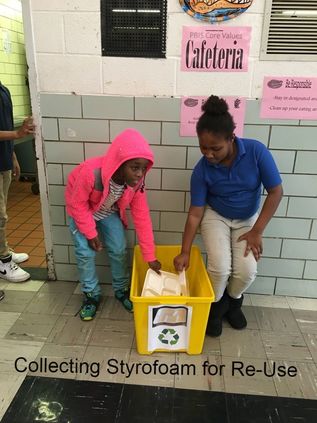
You can also follow the lead of the Young Activists Club in my own city of Takoma Park, MD. These elementary and middle school kids became worried about polystyrene a few years ago, and launched a successful effort to replace their foam lunch trays with reusables.
Ultimately, they were able to round up enough community and business support to get legislation to ban polystyrene not only introduced but passed by the city council.
Fittingly, the name of the new law is, “The Young Activists Act!”
Take Action:
- Watch: The Story of Solutions
- Take the Quiz: What Kind of Changemaker are You?
- Join the Fight: Encourage your town to ban styrofoam too.
